

Ukraine has informed the Greek government that it intends to continue operations against Russian ships, even after the diplomatic incident caused by the detection of an armed sea drone near Lefkada, according to an eye-opening report by Euractiv. And this is being done without respecting the security status of Greek territorial waters, or the potential damage and even deaths it could cause in the middle of the tourist season. The report cites diplomatic sources in Athens. So far, there is no official public statement from the Ukrainian government formulated in this way. According to Euractiv, this is the position that Ukrainian diplomats conveyed to Greek officials during closed-door diplomatic contacts. • Kyiv reportedly intends to continue strikes against Russian ships on the high seas, citing the right to self-defense. • Athens requested specific guarantees after an unmanned sea drone carrying approximately 100 kilograms of explosives was found near Lefkada. • Ukraine apologized for the incident, without however – according to the same sources – abandoning the naval operations in question. • Officially, these are described as operations in international waters. However, this specific drone ended up near a Greek island. • For Athens, the political message is considered highly stern, as Greek protests do not seem to have led to a change in Ukrainian military strategy.
Drone with 100 kilograms of explosives
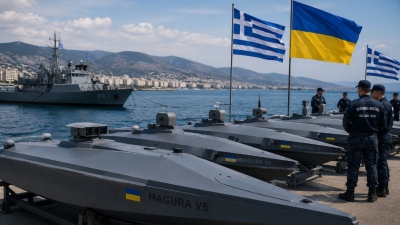
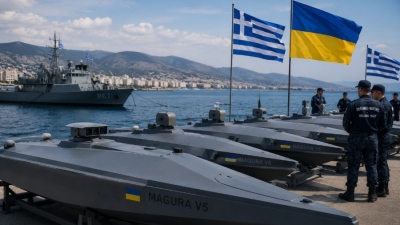
The catalyst for the diplomatic tension was a Ukrainian unmanned surface vessel (USV), which was spotted by fishermen on May 7, 2026, near Lefkada. According to reports and competent authorities, the drone ended up in Greek territorial waters after apparently losing its remote-control guidance. Inside, approximately 100 kilograms of explosives were found, which were subsequently neutralized through a controlled explosion. The National Defense Minister, Nikos Dendias, stated that Athens has no doubt about the Ukrainian origin of the device. "The Ukrainian side must offer us a substantial apology and provide absolute guarantees that such an incident will not be repeated in the wider region," he noted. According to diplomatic sources cited by Euractiv, the alleged target of the drone was a Russian tanker in the Mediterranean, though its specific operational details were not made public. The core problem, according to the report, was that the drone never reached its target, lost control, and ended up near one of Greece’s most important tourist islands. Had it followed a different path, it could have collided with a passenger ship, a cruise ship, or a commercial vessel.
A pretextual apology without abandoning operations
Ukraine officially apologized to Greece for the incident, stating that it remains committed to international law and wishes to prevent similar occurrences. However, according to Euractiv, Ukrainian diplomats made it clear that Kyiv does not intend to suspend its attacks against Russian vessels on the high seas. The Ukrainian side invokes Article 51 of the United Nations Charter, which recognizes the inherent right of individual or collective self-defense. Consequently, the apology appeared to relate solely to the loss of control over the drone and its drift near the Greek coastline, rather than the conduct of the naval operations themselves.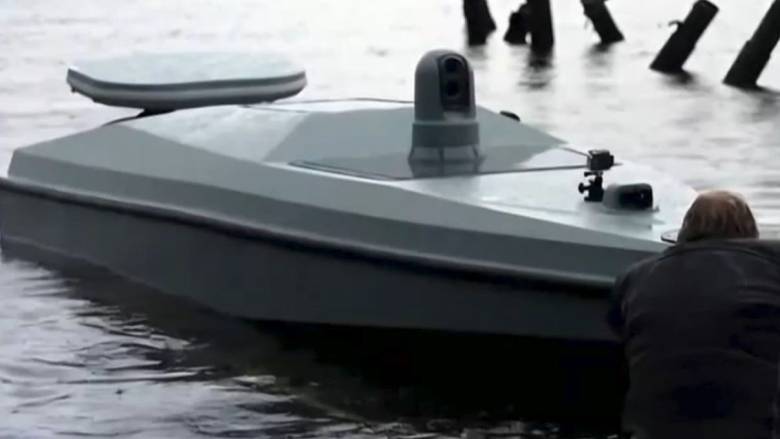
Why Athens did not receive the guarantees it requested
The Greek government requested not only explanations and an apology, but also reassurances that the Mediterranean will not turn into a new theater of military operations. However, according to the report, Kyiv's response was that it takes Greek concerns into account, without any intention of altering its military strategy.
The damage to Greece
Technically, Ukraine refers to operations on the high seas rather than within Greek territorial waters. However, this past incident demonstrated that a drone losing control cannot respect maritime borders. Consequently, such operations could potentially affect:
• Greek territorial waters,
• international maritime trade routes,
• passenger and tourist navigation,
• the environmental safety of Greek islands,
• the country's economic interests.
For Athens, according to the article, this is not a theoretical debate regarding Ukraine's right to self-defense, but an issue directly threatening the security of one of Europe's premier tourism and shipping hubs.
The Ukrainian invocation of the bilateral agreement
Kyiv also reportedly invoked the 1996 Treaty of Friendship and Cooperation between Greece and Ukraine, which provides for consultations in cases where international peace and security may be threatened. According to the Ukrainian argument, Athens gave excessive publicity to the incident before bilateral consultations were concluded. The report, however, points out that this stance fails to address the fundamental question: why an armed Ukrainian drone ended up in Greek territorial waters without prior notification to the Greek authorities.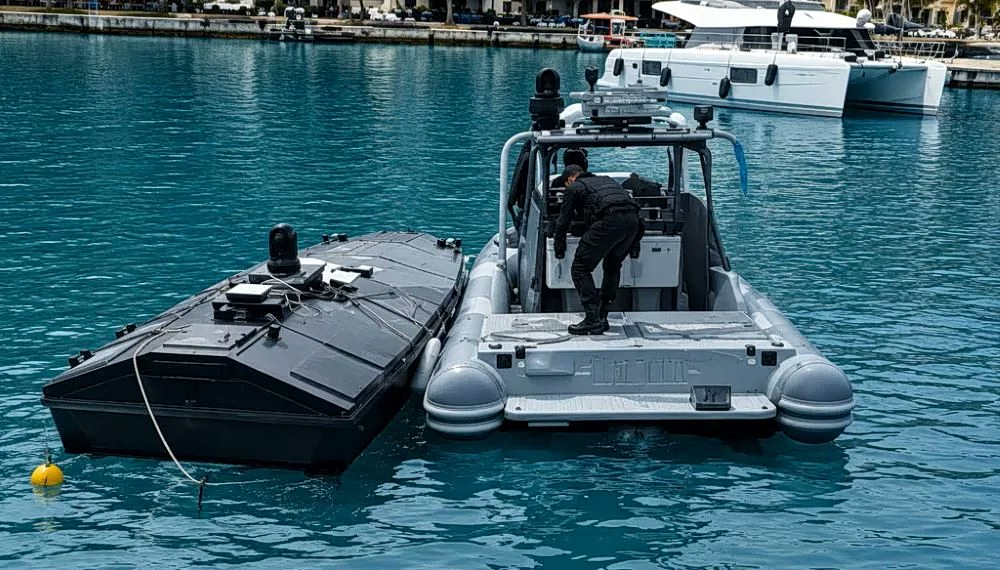
Is every Russian vessel a legitimate military target?
Although Article 51 of the UN Charter recognizes the right to self-defense, this does not mean that every Russian commercial ship automatically constitutes a legitimate military target. Under international humanitarian law, a civilian vessel can only become a legitimate target if it makes an effective contribution to military action and its destruction offers a definite military advantage. Furthermore, additional legal questions arise when dealing with tankers flying the flag of a third country, staffed by civilian crews, or moving through congested international shipping lanes. Even in the case of a legitimate military target, Ukraine is bound to respect the principles of distinction, proportionality, and the protection of civilian navigation.
The political message to Greece
In the report's assessment, Kyiv's stance is perceived as a refusal to grant Athens any say in shaping Ukrainian operations in the Mediterranean. Greece may make diplomatic representations, demand explanations, and publicly voice its discontent. However, according to the information cited by Euractiv, Ukraine appears determined to continue acting primarily based on its own military priorities. The report highlights that this significant development is particularly important given that Greece has provided political, military, and humanitarian support to Ukraine. The political essence of the matter is that Athens demanded guarantees so that armed Ukrainian drones would never again pose a threat to Greek islands, while the Ukrainian side reportedly made it clear that operations against Russian ships will persist. Officially, there is talk of operations on the high seas. However, the previous incident demonstrated that when an unmanned vehicle loses control, the boundaries between international and territorial waters can, in practice, become blurred. If the Greek government limits itself to diplomatic statements without securing concrete guarantees, Kyiv may perceive that Greek protests carry no real consequences—representing an unacceptable capitulation of national interests to a supposed "ally." 
www.bankingnews.gr

Σχόλια αναγνωστών